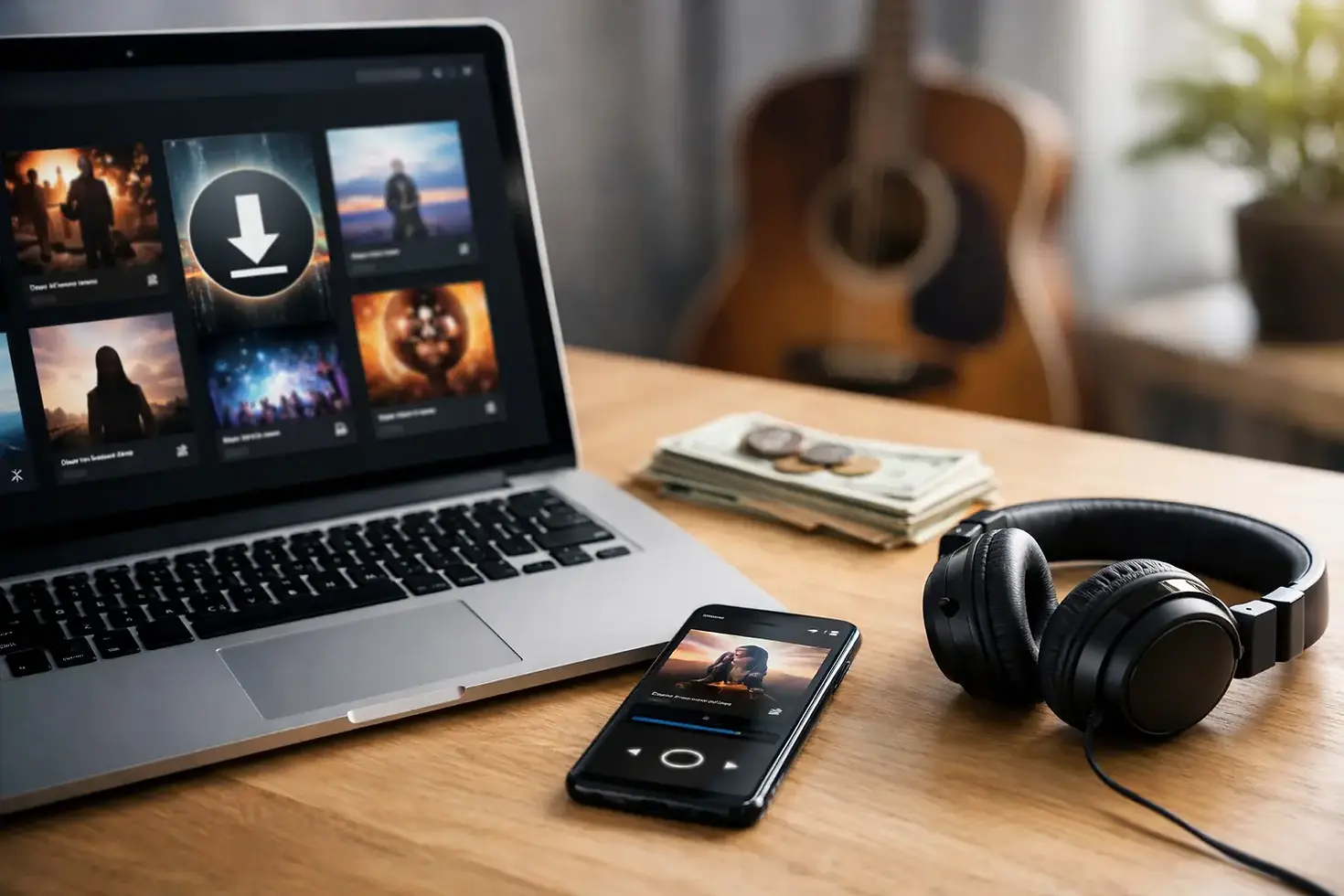
How to Sell Music Downloads That Fans Buy

A stream is nice. A download is a choice.
That difference matters if you are figuring out how to sell music downloads without turning your artist page into a discount bin. When somebody buys a file they could have streamed for free, they are not just paying for audio. They are backing your work, collecting a piece of your catalog, and saying, yes, I want this in my own library.
For independent artists, that changes the game. Downloads will not replace streaming reach, and they are not supposed to. They work best as direct support, higher-intent merch, and a cleaner way to build a real fan relationship outside the algorithm.
How to sell music downloads without feeling pushy
The biggest mistake is treating downloads like leftover inventory. Fans can feel that instantly. If the pitch is basically, buy this because streams pay nothing, you are asking people to solve your business problem. Most will not.
A better approach is to make the download feel like the most direct version of the art. That means a polished file, thoughtful presentation, strong cover art, and a reason to own it beyond passive listening. Instrumental artists have a real advantage here. People use this kind of music while working, driving, editing, studying, or zoning out with headphones, and many still like keeping high-quality files on hand.
Selling downloads works when three things line up. The music has a clear identity, the buying experience is simple, and the fan understands why owning it is worth it. Miss one of those and sales get choppy.
Start with the product, not the platform
Before you pick a storefront, get the release itself ready. This is where a lot of independent artists rush. If the files are messy, the metadata is wrong, or the artwork looks like an afterthought, the whole thing feels less collectible.
Export high-quality WAV files for your archive and offer MP3, WAV, or both depending on your audience. MP3 is easy and familiar. WAV appeals to listeners who care about audio quality, DJs, editors, and fellow producers. If your audience leans more music-nerd than casual playlist listener, offering both is smart.
Your naming should be clean and consistent. Artist name, track title, album title, year, cover art, and credits should all match. It sounds small, but details like that affect trust. A fan buying direct is already leaning in. Give them something that feels finished.
This is also where visual presentation pulls serious weight. If your music lives in a wider creative world of artwork, mood, and story, the download becomes part of that ecosystem. That is especially useful for synthwave, ambient, progressive instrumental, and other genre scenes where aesthetics are part of the appeal.
Choose a storefront that fits your audience
If you want to know how to sell music downloads in a way that lasts, choose a platform based on control, fees, and fan behavior, not hype.
A marketplace can help with discovery and built-in trust. Fans already know how checkout works there, and some platforms make pay-what-you-want pricing easy. The trade-off is less ownership of the customer relationship and fewer branding options.
A website store gives you more control over the experience, stronger brand consistency, and a better path toward selling other items like art, merch, or bundles. The trade-off is that you have to bring the traffic yourself. There is no magical crowd waiting in the aisle.
For many independent artists, the strongest setup is hybrid. Use streaming platforms for reach, social media for attention, and your own store for the actual sale. If you also list music on a marketplace, think of that as an extra lane, not the whole road.
Price for support, not mass volume
Low pricing feels safe, but it can work against you. If a track is priced so low that it feels disposable, fans may treat it that way. On the other hand, if you price too high without adding context or value, you create hesitation.
Singles often work in the impulse-buy range. EPs and albums give you more room, especially if they come with better artwork, bonus tracks, instrumental versions, liner notes, or a sense of being a complete release. Pay-what-you-want can be effective if your audience already feels connected to the project, but it is less useful when nobody understands why they should care yet.
Bundling is usually stronger than discounting. Pair an album with a PDF art booklet, alternate mixes, wallpapers, or a behind-the-scenes note about the creative process. That turns the purchase into an experience instead of a transaction.
The question is not just what your music is worth. It is what format makes a fan feel good about buying it.
Give fans a reason to own the file
Streaming is convenience. Downloads need a slightly different promise.
Sometimes that promise is quality. Sometimes it is collectibility. Sometimes it is support. Often it is all three.
If you make instrumental music, lean into use cases that fit real listening habits. A fan might buy your album because they want uninterrupted files for late-night drives, creative work sessions, or offline listening while traveling. A producer might buy because they respect your sound design and want the higher-quality version. A longtime listener might buy because they want to support the next release.
Say that plainly. You do not need a huge sales script. A few grounded lines can do the job: available in high-quality download, direct support for future releases, includes full artwork, yours to keep.
That lands better than oversized marketing language because it respects the audience. People who follow independent artists usually know exactly what a direct purchase means.
Make the sales page feel alive
The product page should do more than display a price. It should make the music legible before checkout.
Use a short description that captures the mood, texture, and angle of the release. Not five paragraphs of lore. Just enough to place the listener inside the world of the track. If it is a neon-lit synthwave single with pulsing bass and cinematic pads, say so. If it is an odd-meter prog instrumental built for headphone listening, say that instead.
Preview clips matter. Cover art matters. Track titles matter. If the release has a story, include a sentence or two. If it was made during a specific season of your life or in a specific creative lane, that context can help a fan connect.
This is one place where a creator brand has an edge over faceless distribution. A direct storefront can feel like your little slice of the internet, not just another upload form.
Promotion should point to ownership, not just awareness
A lot of artists promote a release and forget to promote the format.
If your post says the song is out now, most people will default to streaming. If you want download sales, mention the download. Not in every sentence, and not with hard-sell energy. Just make it visible. Available to stream everywhere and downloadable directly is often enough.
The message should shift a bit depending on the channel. Social posts can be short and visual. Email is better for direct purchase intent because you can talk to listeners who already care. Blog content can help too, especially if your audience includes fellow musicians who are curious about process, gear choices, arrangement ideas, or mixing decisions behind the release.
This is where everything connects. Music, visuals, story, and direct support should feel like parts of one creative system, not random tabs fighting for attention.
How to sell music downloads to a small audience
You do not need a huge following. You need the right layer of connection.
A small audience that trusts your taste and actually likes your work can outperform a much bigger audience that only half remembers your name. That is why direct sales often grow from consistency rather than virality. Regular releases, recognizable artwork, honest captions, and a dependable home base matter more than chasing one giant spike.
If only a small percentage of your listeners ever buy downloads, that is normal. Downloads are a support product. They attract fans with stronger intent. Treat them that way.
That also means you should not judge the format by streaming math alone. A release with modest streams can still do well in direct sales if the core audience feels invited to own it.
Common mistakes that quietly kill download sales
The first is friction. Too many clicks, weird checkout flow, unclear file format, or a clunky mobile experience will lose people fast.
The second is weak framing. If fans do not understand why the download exists or what makes it different from streaming, they will not act.
The third is inconsistency. If you only mention direct downloads once on release day and never again, most of your audience will miss it. People need multiple chances to care.
And the fourth is sounding apologetic. Selling direct is not awkward. It is one of the healthiest parts of being independent. If someone wants to support the music in a more tangible way, make that path easy and worth taking.
For a creator-led brand like F87 Studio, that can mean presenting music as part of a broader art world, where a release is not just a file but a piece of the whole project.
The best download stores do not beg. They invite. They make ownership feel intentional, personal, and creatively charged. If your music already has a point of view, the job is not to fake urgency. It is to package that point of view clearly enough that the right listener wants to keep it.


Comments